The Story of The Black Pearl
Honoring the generations who built a sanctuary of joy, freedom, and fellowship on the Carolina coast.
Welcome to Our Heritage
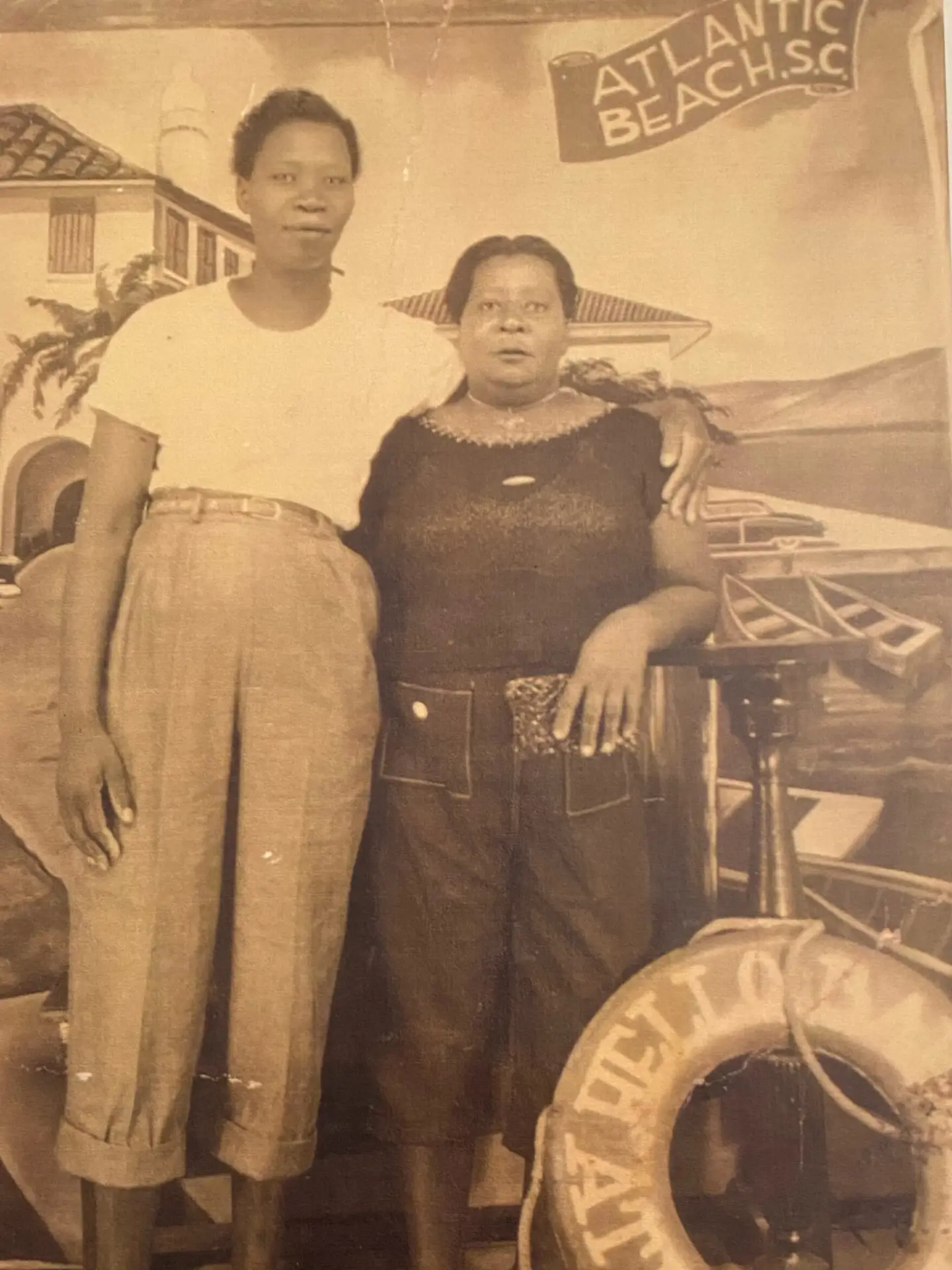
For decades, Atlantic Beach has been much more than just a stretch of sand. Affectionately known to many as “The Black Pearl,” it became a thriving community and a safe haven. During the Jim Crow era, Black families were legally barred from enjoying the same public spaces and beaches as white people. In response to this hardship and segregation, our community built powerful institutions, successful businesses, and cultural hubs of our very own. Atlantic Beach stands as a proud testament to that resilience.
The Visionaries Who Built It
The foundation of Atlantic Beach began with the clear vision of men like George W. Tyson. Starting in 1934, Mr. Tyson began purchasing acres of oceanfront property. When he faced financial difficulties a few years later, he wisely transferred the property to the newly formed Atlantic Beach Company. This company was a dedicated group of Black professionals, doctors, and educators who carried the dream forward.
Together, they helped build a thriving town filled with beach cabins, motels, and restaurants. Dr. Robert Gordon, the company’s Vice President, developed the Hotel Gordon. Built on the oceanfront, it was a first-class hotel offering elegant accommodations and large dining rooms for guests.
A Timeline of Our Legacy
Walk with us through the years as we remember the struggles, celebrate the triumphs, and honor the enduring spirit of the Gullah Geechee people and the founding families of Atlantic Beach.



Interested in a tour of Atlantic Beach?
George W. Tyson was eight years old when the Wilmington Riot also known as Wilmington Massacre occurred. Roxie Ballen Tyson (1889-1973) was his wife and a seamstress.
Tyson purchased 29th Avenue South and 30th Avenue South from Mr. R.V. Ward by paying $2000.00 for the 47 acres.
George W. Tyson was given another chance to buy two more blocks which were 31st and 32nd Avenue South from Mrs. Viola Bell. He paid $600.00 plus taking on a mortgage she had on the property. This time it was 49 acres.
Tyson transferred ownership of the property to the newly developed Atlantic Beach Company (ABC). They had ten members originally. The ABC consisted of professionals. However before ABC was formed Mr. Tyson sold some properties.
The company paid him $1,000.00 for the property in addition to that ABC took over two existing mortgages which totaled $10,000.00
They sold lots 50 by 100 feet.
Dr. James Ward Seabrook - was the first President (1943-1956) and one of the earlier purchasers. He paid $300.00 for his lot in 1936. He was also president of Johnson C. Smith University and Fayetteville State University (1933-1956).
Dr. Robert Keith Gordon- first black doctor in Dillon, S.C and Vice President of the Company.
Dr. Peter Carlisle Kelly III from Georgetown, S.C and practiced in Conway, S.C. Also, he bought land from Mr. Tyson and later became secretary of the Company.
The company paid him $1,000.00 for the property in addition to that ABC took over two existing mortgages which totaled $10,000.00
They sold lots 50 by 100 feet.
Hotel Gordon was developed after 1943 by Dr. Robert Gordon from Dillon, S.C.
It was our first and finest oceanfront hotel we ever had. Mrs. Cora Taylor is quoted as saying it was a “Mansion”. She said it had maids’ quarter even in the back. One of the postcard per Ms. Sherry Suttles book: Images of America: Atlantic Beach, and paraphrase that it had running hot and cold water in each room, some rooms had private bath rooms and some rooms had joining bathroom called semi-private bathrooms. It had top of the line mattresses, and large dining room. It was first class. Also this one was open year around.
Unfortunately on October 14th, 1954 a category 4 hurricane, Hazel, destroyed it. He later built another hotel on Hwy. 17, built not of the grandeur of the first one.
Atlantic Beach became the most popular place for black entertainment in South Carolina from 1930’s through the early 1970’s.
There was a fence at one time that lead from the shore out into the ocean. Later they placed an orange rope. They were on the boundaries of 29th Avenue South and 32th Avenue South. You could not cross that fence or rope if you were black.
You could swim within the boundaries. This was one of the main attractions especially in its early days.
Atlantic Beach which is between Windy Hill and Crescent Beach became incorporated in 1966 with Emory Gore as mayor, Millard Rucker, Daniel Gore Lee Grant, John Mark Simmons as councilmen and Henry Hemingway as Police Chief.
Your Memories Are Our History
Our story is still being written, and your memories are a vital part of it. If you or your family spent time on these shores, we warmly invite you to share your stories and photographs with us. Together, we can ensure the legacy of Atlantic Beach continues to shine for the next generation.